
.png)

Negative prices: SMART OA becomes mandatory for renewable installations over 1 MW
The regulatory framework is evolving. With the decree published on July 24, 2026, the requirement to stop or limit production during periods of negative prices is being gradually extended to renewable energy installations benefiting from a Feed-in Tariff (FiT) contract of more than 1 MW.
This development is part of the transformation of the French electricity system, where the rise of renewable energy makes more dynamic production management essential.
For producers, this new regulation entails new obligations, but also paves the way for new value-creation opportunities through aggregation and the Balancing Mechanism.
In this article, Bohr Energie breaks down these regulatory changes, their impacts, and the solutions to navigate this transition with confidence.
Why are electricity prices turning negative?
For several years now, episodes of negative prices on the electricity market have been increasing across Europe.
They occur when electricity production exceeds consumption. This situation is particularly common on very sunny or very windy days, when solar and wind farms produce massive amounts of energy while demand remains low.
In these situations, the price of electricity on the markets can become negative: some producers are then required to pay to inject their output into the grid.
With the increasing share of renewable energy in the energy mix, these episodes are expected to become more frequent. Public authorities are therefore gradually adapting regulations to maintain the balance of the electrical system while limiting the cost of public support for renewable energy.
What is SMART OA?
The SMART OA mechanism allows the obligated purchaser to send instructions to stop or temporarily limit production during certain periods, particularly when market prices turn negative.
The goal is twofold:
- contribute to the balance of the electrical system;
- adapt renewable production to actual market conditions.
For producers under Feed-in Tariffcontracts, this means they must be able to receive and implement these instructions in accordance with regulatory requirements.
What changes with the decree of July 24, 2026
Until now, only certain installations were affected.
The new decree gradually extends the SMART OA mechanism to renewable electricity production installations under Feed-in Tariff over 1 MW.
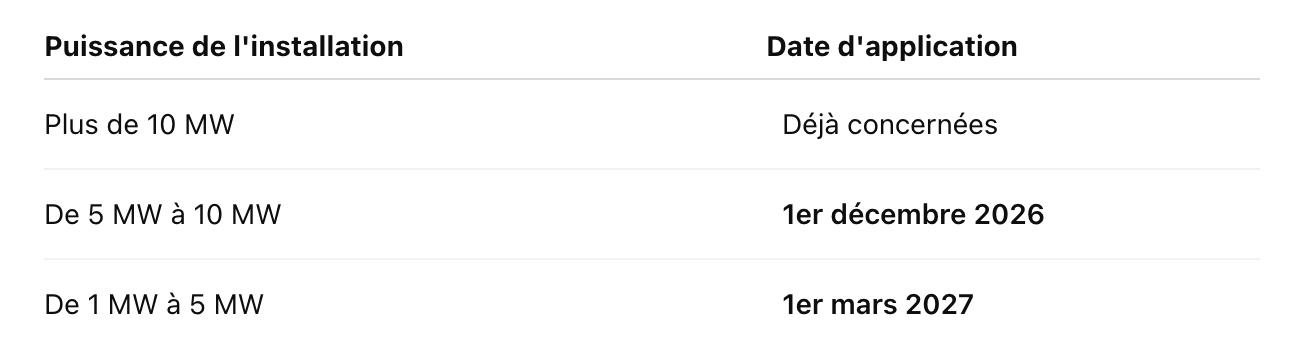
Producers have several months to prepare their facilities and anticipate the new requirements.
Which facilities are affected?
This regulatory change gradually applies to electricity production facilities benefiting from aFeed-in Tariffcontract, including:
- photovoltaic power plants;
- wind farms;
- hydroelectric power plants;
- other renewable energy sectors eligible for the Feed-in Tariff scheme.
If you operate multiple power plants, it is recommended that you identify those affected by these new deadlines now.
What is the impact on producers?
This change requires a new operational approach.
Operators will specifically need to:
- be able to receive shutdown or curtailment instructions;
- ensure the execution of transmitted orders;
- ensure their facilities comply with the new regulatory requirements;
- track periods of negative pricing and their impact on operations.
For many producers, this trend reinforces the need for a partner capable of managing their assets.
A regulatory constraint... or an opportunity?
At first glance, this new requirement may seem like an additional burden.
In reality, it is part of a deeper transformation in the electricity market: renewable assets are gradually becoming key players in power system flexibility.
This shift opens up new possibilities.
By aggregating multiple installations, it becomes possible to:
- optimize their management;
- pool their flexibility;
- monetize specific services provided to the grid;
- improve the overall economic performance of the portfolio.
The Adjustment Mechanism (AM) is a particularly attractive value-creation lever for producers with multiple assets.
How can you prepare today?
Even if your facility is not affected until 2027, it is recommended that you prepare for this change now.
The main steps are as follows:
✅ Check if your facilities are affected.
✅ Identify the necessary technical adjustments.
✅ Prepare for the management of SMART OA instructions.
✅ Evaluate the opportunities offered by aggregation.
✅ Explore the monetization of your assets via the Balancing Mechanism.
Anticipating these changes allows you to approach upcoming regulatory deadlines with confidence while identifying new levers for value creation.
The Bohr Energie approach
At Bohr Energie, we support renewable energy producers in monetizing their production and navigating the evolving electricity markets.
Our expertise covers the entire value chain.
SMART OA
We assist producers in managing new regulatory obligations related to negative price periods and production shutdown instructions.
Electricity aggregation
Ouraggregation services help optimize the market value of your production while simplifying portfolio management.
Balancing Mechanism
We also develop solutions to monetize the flexibility of your installations through the Balancing Mechanism, turning new regulatory constraints into economic opportunities.
Our ambition is simple: to enable producers to take full advantage of the evolving electricity market.
FAQ – SMART OA
Does this apply to my installation? Installations under a Feed-in Tariff contract with a capacity of over 1 MW will be gradually affected according to the schedule set by the decree of July 24, 2026.
Why are electricity prices turning negative? Negative prices occur when the supply of electricity exceeds demand. They are becoming increasingly frequent due to the growth of renewable energy and periods of low consumption.
What should I do if my installation is affected? We recommend anticipating regulatory changes, verifying the necessary technical adjustments, and exploring solutions to optimize the management and value of your production.
What is the role of an aggregator in this context? An aggregator supports producers in maximizing the value of their output on electricity markets. Depending on the services offered, they can also facilitate compliance with new regulatory requirements and develop flexibility solutions, particularly through the Balancing Mechanism.
Anticipate new requirements today
Episodes of negative pricing will continue to grow as renewable production increases. The expansion of the SMART OA program marks a new milestone in the evolution of electricity markets: producers must now balance economic performance, regulatory compliance and flexibility.
At Bohr Energie, we are convinced that this development is, above all, an opportunity. Thanks to our expertise in electricity aggregation, SMART OA, Adjustment Mechanism and optimizing producer revenue, we are already supporting many operators through this transition.
Would you like to know if your portfolio is affected or discover solutions tailored to your facilities? Our teams are at your disposal to discuss this.